
Comparison / Car Seats
Convertible Car Seat vs Infant Car Seat: A Dad's Honest Take
 Ryan · Degen DadUpdated Aug 15, 2026
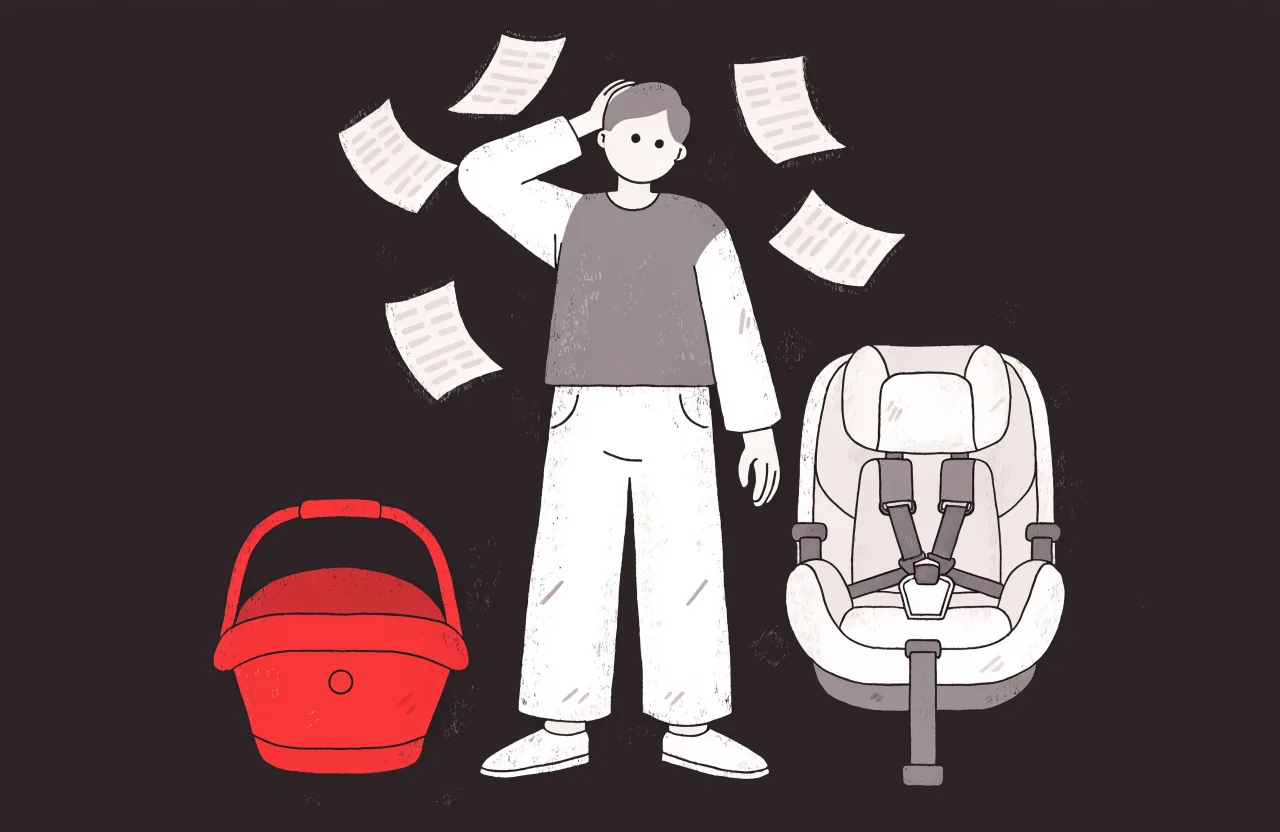
Car seat shopping made me want to lie down in the store aisle and give up. If you're wondering what is a convertible car seat, here's the short version: it's a seat that converts from rear-facing (for babies) to forward-facing (for toddlers), so it grows with your kid. An infant car seat is smaller, lighter, and clicks in and out of a base — designed specifically for newborns up to about 30 lbs. The difference between an infant and convertible car seat comes down to convenience vs longevity. After installing more car seats than I care to remember, here's the real deal on both.
3
Convertible Car Seat
2
Tie
5
Infant Car Seat
| Feature | Convertible Car Seat | Infant Car Seat | Winner |
|---|---|---|---|
| Lifespan | Birth through 65+ lbs — one seat for years | Birth to ~30 lbs; you'll outgrow it by 12-15 months | Convertible Car Seat |
| Cost Over Time | Higher upfront but saves money long-term | Cheaper initially but you'll buy a convertible next anyway | Convertible Car Seat |
| Portability | Stays in the car; baby must be moved separately | Clicks out with sleeping baby still in it — game changer | Infant Car Seat |
| Newborn Fit | Some models are too big for tiny newborns | Designed specifically for newborns; better cocoon fit | Infant Car Seat |
| Sleeping Baby Transfer | Must unbuckle and lift sleeping baby out every time | Carry the whole seat inside without waking them | Infant Car Seat |
| Stroller Compatibility | No click-in stroller option; need a separate stroller | Snaps into travel system strollers — huge convenience | Infant Car Seat |
| Installation | Install once, leave it; heavier but more stable | Base stays in car; seat clicks on and off easily | Tie |
| Weight to Carry | 15-25 lbs empty; not meant to be carried | 8-10 lbs empty but 20+ lbs with a baby in it | Tie |
| Multi-Car Flexibility | Need a seat in every car; expensive to duplicate | Buy extra bases cheaply; move one seat between cars | Infant Car Seat |
| Rear-Facing Duration | Can rear-face up to 40-50 lbs (age 3-4) | Maxes out around 30-35 lbs rear-facing | Convertible Car Seat |
What each seat actually is (30-second version)
An infant car seat is the bucket with a handle: rear-facing only, clicks in and out of a base that stays in the car, and usually clicks into a stroller frame too. It fits from birth until your kid hits the seat's height or weight limit — often somewhere around the one-year mark, sometimes sooner with a tall baby.
A convertible seat is the big one that stays installed in the car. It starts rear-facing for babies and later converts to forward-facing, and a lot of models now stretch all the way into booster mode. One seat, several years, zero carrying handle.
The carry-the-bucket phase is the whole argument
Here's what the spec sheets don't capture: with an infant seat, a sleeping baby comes out of the car still asleep. You unclip the bucket, carry it inside, and the nap survives. With a convertible seat, you unbuckle a warm sleeping human, and roughly 60% of the time the nap dies in your arms along with a piece of your soul.
The counterargument is real though — the bucket gets heavy fast. By eight or nine months you're deadlifting 25+ combined pounds of seat and child through parking lots, and most dads I know had quietly stopped using the carry handle months before the seat was outgrown. The magical click-and-go phase is shorter than the marketing implies.
The money math over four years
The infant-seat route means buying two seats: the bucket now, a convertible later. The convertible-only route means buying one. On pure math, convertible-only wins by a couple hundred bucks or more.
But run the math on your actual life. If you do daily daycare drop-offs, the bucket's click-in-click-out saves you a wrestling match twice a day, every day, for a year. If your car mostly does weekend trips, the convenience premium buys you a lot less. And if a second kid is on the roadmap, the infant seat gets a second life and the math flips back in its favor.
Either way, buy the seat new or from someone you'd trust with your kid's life — a seat with unknown crash history isn't a deal, it's a gamble.
When convertible-from-birth is the right call
Plenty of families skip the bucket entirely and it's a legitimate choice — the safety of a properly installed convertible with correct newborn inserts is not in question. It fits best if you're a one-car household, your baby hates the bucket anyway (some do, loudly), or the budget genuinely only covers one good seat.
The trade-offs you're accepting: no travel-system stroller clicks, waking the baby at every stop, and checking that the specific convertible model actually fits a newborn well — some have minimum weights or recline angles that make the first weeks awkward. Check your model, not the category.
Whatever you buy, keep them rear-facing as long as the seat's limits allow, not just until a birthday. That one's not a preference — it's physics.
The installation mistakes everyone makes once
The seat matters less than the install. The classics: base too loose (it shouldn't move more than an inch at the belt path), chest clip riding at belly level instead of armpit level, straps twisted or too loose after the puffy-jacket mistake, and the recline angle set wrong for a newborn's floppy neck.
Most fire departments and many hospitals will check your install for free, and certified techs at Safe Kids events have seen every mistake you're about to make. Thirty minutes with one of them is worth more than thirty hours of comparison shopping. I say this as a guy who installed the first base wrong and found out at exactly one of those checks.
Choose Convertible Car Seat if...
- +Budget-conscious families who want one seat for the long haul
- +Parents who don't frequently move the car seat between vehicles
- +Families who want extended rear-facing beyond age 1
Choose Infant Car Seat if...
- +New parents who want the sleeping-baby-transfer magic
- +Families with multiple cars who need flexibility
- +Anyone using a travel system stroller
The Bottom Line
Start with an infant seat for the first year — the ability to move a sleeping baby without waking them is worth every penny. Then switch to a convertible when they outgrow it. Yes, it costs more total, but your sanity has a price tag too.
Frequently Asked Questions
What does 'convertible car seat' mean?
A convertible car seat is one seat that converts between modes as your kid grows — it starts rear-facing for a baby and then converts to forward-facing for a toddler. That's where the name comes from. Instead of buying a small infant seat and then a bigger one later, a convertible covers both stages, typically from birth up to 50-65+ lbs.
What's the difference between an infant and a convertible car seat?
An infant car seat is small, rear-facing only, and clicks in and out of a base so you can carry a sleeping baby straight inside — but you'll outgrow it around 30 lbs (often by 12-15 months). A convertible car seat stays installed in the car, doesn't carry out, but converts from rear- to forward-facing and lasts for years. Infant seats win on convenience; convertibles win on longevity and cost over time.
Can a newborn use a convertible car seat?
Yes — most convertible seats are rated from birth and rear-face from day one. The catch is fit: some convertibles are roomy and don't cradle a tiny newborn as snugly as a dedicated infant seat, so check the minimum weight (usually 4-5 lbs) and use the included infant insert. If your newborn is on the small side or premature, an infant seat often gives a better, safer fit early on.
What's the difference between a convertible and an all-in-one car seat?
A convertible goes rear-facing to forward-facing and usually tops out as a harnessed seat. An all-in-one (or 3-in-1) adds a third mode — it later converts into a belt-positioning booster, so in theory it's the only seat you ever buy. All-in-ones are jacks-of-all-trades: convenient, but they sometimes compromise a bit on newborn fit or booster comfort compared to a seat built for one job.
Infant car seat vs toddler car seat — what's the difference?
An infant car seat is rear-facing only and built for newborns up to about 30 lbs. A 'toddler car seat' usually means a forward-facing harnessed seat (or a convertible used in forward-facing mode) for kids who've outgrown rear-facing limits — generally age 2-4 and beyond. Safety guidance is to keep kids rear-facing as long as their seat allows before moving to forward-facing.