
Comparison / Baby Transport
Jogging Stroller vs Regular Stroller: A Dad's Honest Take
 Ryan · Degen DadUpdated Aug 15, 2026
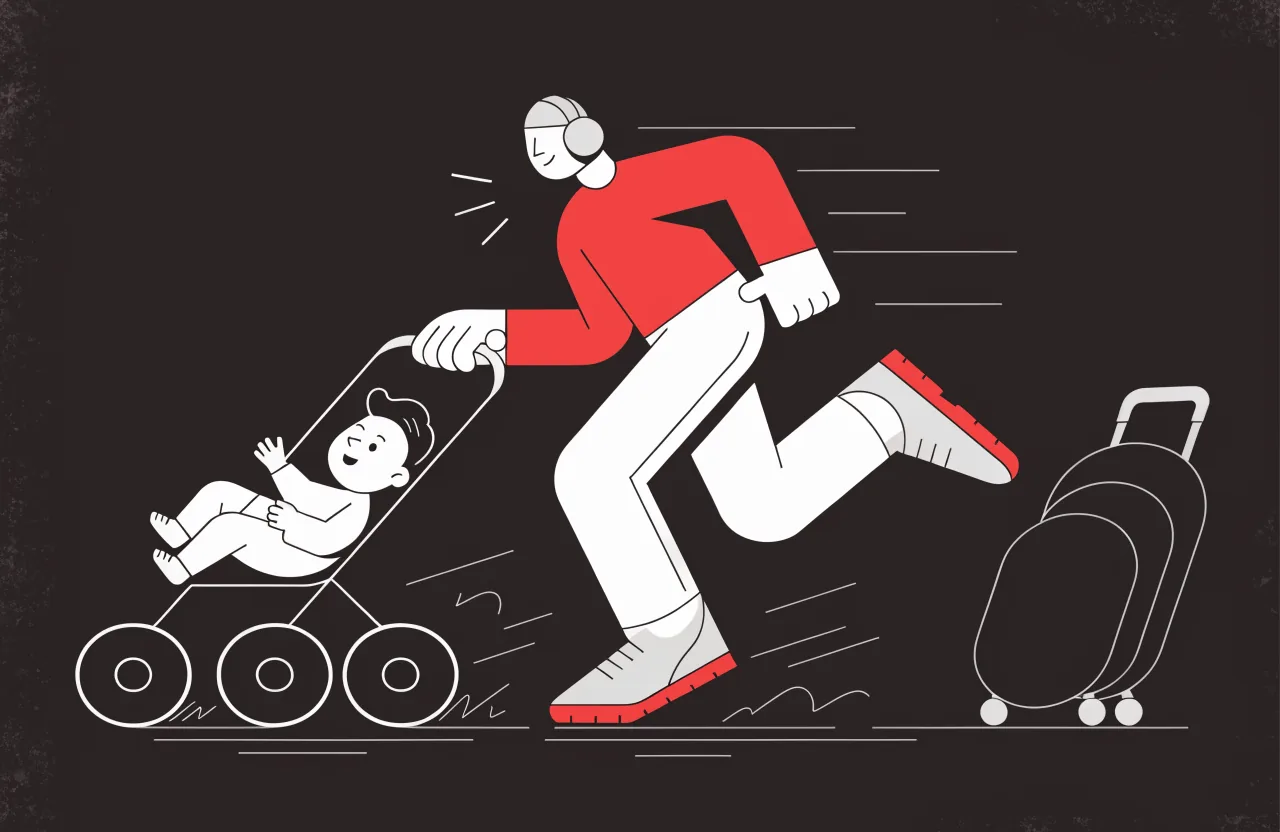
I bought a jogging stroller thinking I'd become a running dad. I did exactly three runs before it became my everyday stroller by default because it was already in the trunk. Turns out using a jogging stroller for errands is like driving a truck to get groceries — doable but not ideal. Here's the real comparison.
5
Jogging Stroller
0
Tie
5
Regular Stroller
| Feature | Jogging Stroller | Regular Stroller | Winner |
|---|---|---|---|
| Running and Exercise Use | Built for it — fixed front wheel, suspension, hand brake, tracks straight at speed | Absolutely not designed for running — wheels wobble, frame shakes, unsafe at speed | Jogging Stroller |
| Maneuverability in Stores | Turns like a bus — the fixed front wheel and large frame make tight aisles painful | Swivel front wheel cuts through crowds and turns on a dime | Regular Stroller |
| Rough Terrain Performance | Air-filled tires and suspension eat up gravel, grass, and broken sidewalks | Small plastic wheels get stuck on every crack and bump | Jogging Stroller |
| Folded Size | Massive when folded — dominates your trunk and barely fits in compact cars | Compact fold, some fit in overhead bins or behind a car seat | Regular Stroller |
| Weight | 25-35 lbs typically — hefting it in and out of the car is a workout itself | 12-22 lbs for most models — one-hand lift into the trunk | Regular Stroller |
| Ride Comfort for Baby | Suspension system means baby barely feels bumps — smooth like a Cadillac | Every sidewalk crack transfers straight to baby — fine on smooth surfaces only | Jogging Stroller |
| One-Hand Pushing | Tracks straight and true — one-hand pushing while holding coffee actually works | Drifts without constant correction from both hands | Jogging Stroller |
| Price | $300-$600 for quality models — BOB and Thule aren't cheap | $150-$400 covers most quality everyday strollers | Regular Stroller |
| Travel Friendliness | Forget bringing this on an airplane or fitting it in a rental car trunk | Compact travel strollers fold tiny and many are airline-approved | Regular Stroller |
| Longevity of Use | Higher weight limits (up to 75 lbs) and more robust build means longer usable life | Many max out at 50 lbs and start feeling flimsy with bigger toddlers | Jogging Stroller |
What mechanically makes a jogger a jogger
The differences are real hardware, not branding: three large air-filled tires instead of four small plastic ones, actual suspension, a front wheel that locks straight for stability at speed, a handbrake on the good ones, and a deeper reclined seat that protects a small kid's neck from bumps. That package is why a jogger rolls over gravel, grass, and cracked sidewalks like they're not there.
It's also why the jogger is heavier, longer, and eats most of your trunk. The regular stroller's whole value proposition is the reverse: light, folds small with one hand, threads through clothing racks and restaurant aisles. Neither is better — they're built for different terrain, and the terrain in question is your actual week.
The question that decides it: will you actually run?
Be brutally honest here, because this purchase is where fitness intentions go to cost money. If you currently run — not planning to, not once-in-college, currently — the jogger is non-negotiable. Running with a regular stroller is genuinely unsafe for the kid and miserable for you.
If 'I'll start running once we have the stroller' is doing the heavy lifting in your justification, recognize the pattern — it's the same one that sold me a rowing machine that became a coat rack. Buy for the life you have. A jogger you never run with is just a worse everyday stroller that doesn't fit in your trunk.
One real exception: rough-terrain families. If your daily walks are trails, gravel, or brutal sidewalks, the jogger earns its keep at walking pace and you can ignore everything I just said about running.
Living with each one day-to-day
The regular stroller wins errands, travel, and anything involving a car trunk or a gate check at the airport. It's the one you grab without thinking. The jogger wins comfort — for the kid riding it and the person pushing it — the second the pavement gets bad, and its air tires plus suspension mean the kid can nap through terrain that would rattle a cheap frame like a maraca.
Air tires do come with bike-tire chores: they lose pressure, and they can flat. A cheap pump lives in our garage now. Also check the fine print on age minimums — most joggers aren't rated for actual running with a baby under about six to eight months, and some want a car-seat adapter or full recline for newborns.
The 'both' answer nobody wants to hear
A lot of two-stroller households arrived there honestly: a solid everyday stroller plus a secondhand jogger. Joggers take abuse well and the used market is full of barely-used ones sold by people who also thought they'd start running — their optimism is your discount.
If the budget only covers one: buy for your five most common outings. For most families that's errands and smooth sidewalks, and the regular stroller wins. If your week genuinely includes runs or trails, flip it. The wrong answer is buying the aspirational one and resenting it at every trunk-load.
Choose Jogging Stroller if...
- +Dads who actually run or jog regularly and want to include baby in the routine
- +Families who walk on trails, parks with gravel paths, or neighborhoods with rough sidewalks
- +Active parents who prioritize ride quality and durability over portability
Choose Regular Stroller if...
- +Daily errands, shopping, airports, and navigating crowded indoor spaces
- +Families who need a lightweight, compact option for the car
- +Travel situations where fold size and weight are the top priority
The Bottom Line
If you genuinely exercise with your kid in tow more than twice a week, the jogging stroller earns its space in your garage. For everyone else, a regular stroller handles 90% of real dad life better — get that first, and add a jogger later if you actually stick with the running habit.
Frequently Asked Questions
What's the difference between a jogging stroller and a regular stroller?
A jogging stroller has three large air-filled wheels, a fixed (lockable) front wheel, suspension, and a hand brake — built to track straight and smooth at running speed on rough terrain. A regular stroller has a swiveling front wheel for easy turning in stores and crowds, folds smaller, and weighs less, but it's not safe to run with. One's a trail/running machine; the other's an everyday errand-runner.
Can you use a jogging stroller as an everyday stroller?
You can, and plenty of parents do — it rides like a Cadillac on bumps and pushes one-handed. The downsides show up indoors: the bigger frame and fixed front wheel make tight store aisles a pain, and it's heavy and bulky in the trunk. It's like driving a truck to get groceries: totally doable, just not ideal for everything.
Can you run with a regular stroller?
No — you shouldn't. Regular strollers have small wheels and a swiveling front that wobbles and can flip at speed, and the frame isn't built to absorb the impact. For running, use a true jogging stroller with the front wheel locked. Also wait until your baby has solid head and neck control (usually around 6-8 months, per the manufacturer) before jogging with them at all.